
Arrival Tracks: Train Stations as Affective Infrastructures in Times of Displacement (TRACKS)
TRACKS investigates how train stations function as affective arrival infrastructures for forced migrants. Combining ethnographic and historical research in Copenhagen and Hamburg, it examines how material, social, and emotional dimensions of arrival shaped each other across three moments of displacement.
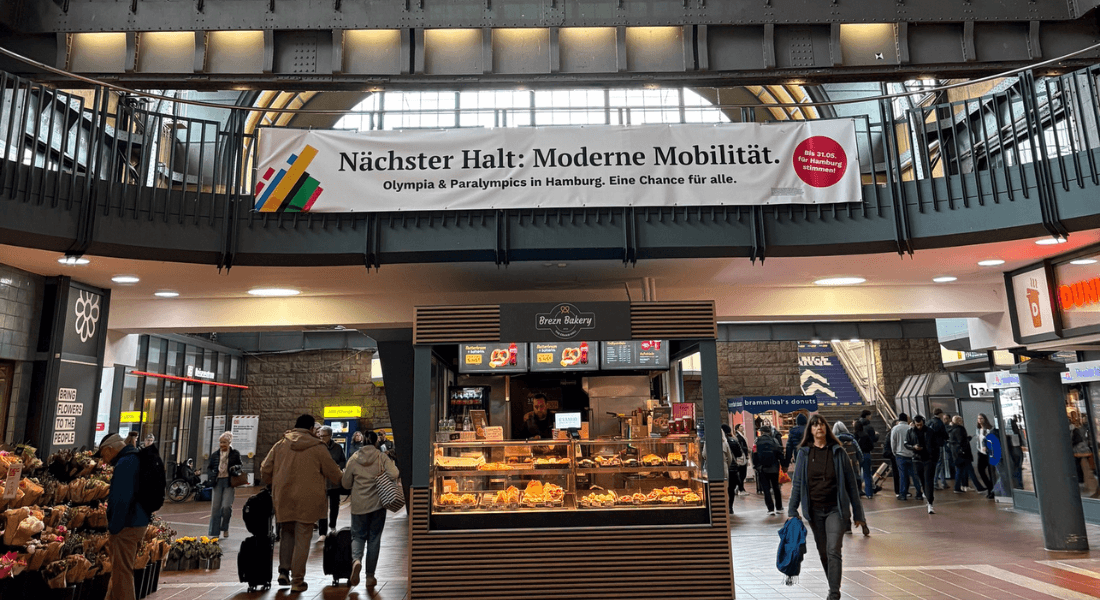
Train stations are key infrastructural junctions for migrants. They are places of arrival and transit, but they also move people in other ways, bringing together humanitarian, local, and commercial actors and shaping consequential emotional geographies of hope, fear, exhaustion, and anger. TRACKS develops a historically grounded understanding of how the central stations in Copenhagen and Hamburg have functioned as arrival infrastructures across three moments of forced displacement from Bosnia in the 1990s, Syria in the 2010s and Ukraine since 2022.
“Train stations are particularly interesting sites to study migration, because they are spaces where everyone is mobile. This helps us think more broadly about the affective dimensions of arrival beyond crisis” (Zachary Whyte, PI).
TRACKS conceptualises train stations as affective arrival infrastructures, sites where material, social, and emotional currents converge to shape migration experiences. Focusing on the central stations in Copenhagen and Hamburg, the project asks how migrants experience and remember their arrivals; how particular historical junctures shape these affective infrastructures; and what conceptualising stations in this way reveals about the role of arrival sites in eliciting and circulating emotions. By bringing scholarship on migration infrastructures into conversation with emotional geography and theories of affect, TRACKS develops a historically embedded analysis of how arrival happens, and how it is remembered.
The international advisory board brings together expertise on (im)mobility trajectories, arrival infrastructures, oral history methods, and migration history:
- Joris Schapendonk (Radboud University)
- Susanne Wessendorf (Coventry University)
- Andrea Althaus (Research Centre for Contemporary History, Hamburg)
Researchers
| Name | Title | Phone | |
|---|---|---|---|
| Wajsberg, Mirjam | Assistant Professor | ||
| Whyte, Zachary | Associate Professor |
